
Edmonton’s roads are becoming a growing safety concern as traffic fatalities and serious collisions continue to rise despite the city’s Vision Zero efforts. In 2025, Edmonton recorded 31 traffic deaths, with 13 involved left-turn collisions, while seven deaths occurred during “left on green” turns that safety advocates say could have been prevented with protected left-turn signals. Pedestrians and other vulnerable road users have been among those most affected.
City officials have acknowledged increases in fatal crashes, particularly those involving pedestrians and motorcycles, with speeding, impaired driving, and other high-risk driving behaviours identified as major contributing factors.
While Edmonton continues to invest in engineering improvements, education, and enforcement to improve road safety, serious collisions remain a pressing concern. Even a pedestrian injury lawyer or personal injury lawyer sees growing concern from clients.
Edmonton Roads Aren't Safe, Statistics Show
Recent reports indicate that Edmonton’s roads have become increasingly dangerous, particularly for pedestrians and other vulnerable road users. Rising traffic fatalities, speeding, and risky driving behaviours suggest that existing safety measures have not been enough to reverse the trend.
One of the most alarming findings is that 31 people lost their lives in traffic collisions in 2025, a figure that safety advocates say reflects a growing public safety crisis rather than isolated incidents. According to advocacy group Paths for People:
- Thirteen of those fatalities involved left-turn collisions, including three pedestrians
- Seven deaths occurred during “left on green” turns
The City of Edmonton’s Safe Mobility Strategy also found that 83% of fatal and serious collisions occurred on roads with speed limits of 50 km/h or higher and along arterial roads in 2025. At the same time, the number of drivers travelling more than 20 km/h above the speed limit increased by 134%.
A city-commissioned survey of more than 1,000 residents found that many believe road safety has worsened over the past five years, with respondents identifying speeding, distracted driving, road rage, and impaired driving as the biggest threats. One Edmonton resident summed up the concern by saying:
“Distracted driving continues to be an issue.”
City officials have also acknowledged that stronger action is needed. Councillor Ashley Salvador stated:
“The number of injuries and fatalities that we’ve seen on our roadways in the last few years is just unacceptable. Everyone deserves to get around safely.”
Advocates argue that enforcement alone will not solve the problem. As Paths for People notes:
“People make mistakes, but our roads should be designed well enough that a simple mistake does not cost someone’s life.”
The organization points to safer intersection designs, protected left-turn signals, raised crosswalks, pedestrian refuge islands, and improved crossing visibility as evidence-based measures that could reduce pedestrian injuries and fatalities.

Keep safe and know your rights after an accident. Seek legal help from Sidhu Personal Injury Lawyers. We work on a contingency fee basis.
What Are Edmonton Officials Doing to Keep The Road Safe?
Edmonton officials are using a combination of safer road design, lower speed limits, traffic enforcement, and public education to reduce serious crashes and protect pedestrians. Through its Vision Zero initiative and Safe Mobility Strategy, the City aims to eliminate traffic-related serious injuries and fatalities by 2032.
These initiatives are especially important because motor vehicle accidents and pedestrian accident cases can result in life-changing injuries, including spinal cord injuries, traumatic brain injuries, and soft tissue injuries, all of which may require extensive medical expenses, treatments, and long-term rehabilitation.
Some of the initiatives include:
Road Safety Initiative | How It Improves Safety |
Lower Speed Limits in Residential Areas | Edmonton has implemented a 40 km/h default speed limit on most residential and downtown streets. According to the City, a pedestrian struck by a vehicle travelling 50 km/h has only about a 20% chance of survival. |
Vision Zero Street Labs | The City partners with neighbourhoods to install traffic-calming measures such as speed humps, curb extensions, and raised crosswalks to slow traffic and improve safety for pedestrians, cyclists, and people using mobility devices. |
Safer Intersections and Pedestrian Crossings | Edmonton continues to upgrade intersections with improved crosswalks, pedestrian signals, and other engineering improvements. |
Traffic Enforcement | Where permitted, Edmonton uses automated enforcement and red-light cameras to encourage drivers to obey speed limits and traffic signals. |
How Dangerous Are Pedestrian Accidents?
Pedestrian accidents are among the most dangerous types of traffic collisions because pedestrians have little to no protection from the force of impact. Most pedestrian accidents involve multiple impacts with the vehicle, the roadway, and other objects.
In a typical adult collision, the vehicle’s front bumper strikes the lower legs first, causing the body to rotate onto the hood. The thighs then hit the hood, followed by the head and shoulders striking the hood or windshield. At higher speeds, the pedestrian may be thrown onto the windshield, roof, or completely over the vehicle before hitting the ground. Each additional impact increases the likelihood of serious injuries.
Types of injuries sustained by adults and children:
- Adults: Musculoskeletal injuries are the most common, accounting for 41.4% of injuries, while 26.7% involve the head and neck.
- Children: Head and neck injuries are the most common, making up 34.6% of injuries, followed by musculoskeletal injuries at 22.2%.
Among adults, common injuries include fractures of the lower leg and knee, pelvic injuries, ligament damage, and traumatic brain injuries. In children, traumatic brain injuries and musculoskeletal injuries are the most frequent, followed by chest and abdominal injuries.
Involved in a Pedestrian Accident? Call a Pedestrian Injury Lawyer
If you’ve been injured in a pedestrian accident in Edmonton, speaking with an experienced pedestrian injury lawyer as early as possible can help protect your legal rights and strengthen your personal injury claim. Serious pedestrian collisions result in extensive medical treatment, lost income, rehabilitation costs, and long-term physical or psychological effects.
One of the first challenges many injured pedestrians face is dealing with the insurance company. Although insurers investigate claims and determine available benefits, their assessment of liability or damages may not always reflect the full impact of your injuries. Before accepting a settlement or providing a recorded statement, understand how doing so could affect your ability to recover compensation for future expenses, lost earning capacity, and ongoing care.
Need legal help with your personal injury case? Sidhu Lawyers handles a wide range of accident cases, including car accidents, pedestrian accident victims, catastrophic injuries, and more.
What Can A Legal Team Do for Vehicle-Pedestrian Accidents
A personal injury lawyer can assess the circumstances of your accident, determine who may be legally responsible, and identify the evidence needed to support your case. This may include police reports, witness statements, surveillance footage, accident reconstruction evidence, and documentation showing how your injuries have affected your daily life and ability to work.
Many Edmonton personal injury lawyers also help clients determine whether they may be entitled to statutory accident benefits in addition to pursuing a negligence claim against the at-fault party. Because limitation periods and insurance requirements apply, seeking legal advice from a pedestrian accident lawyer promptly can help preserve your rights and ensure important deadlines are not missed.
If your goal is to receive fair compensation after a serious pedestrian accident, consulting a reputable personal injury law firm like Sidhu Personal Injury Lawyers Edmonton can provide clarity about your legal options.
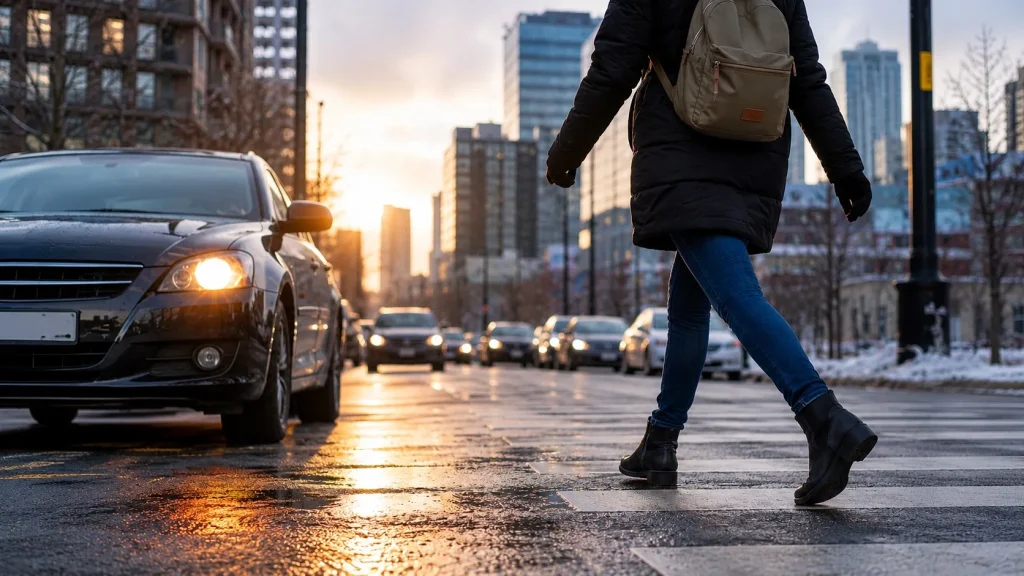
When Things Go Wrong – Call Sidhu Lawyers
Get a free initial consultation with our team after you seek medical attention. Our lawyers will look into your case and find ways to help you obtain a fair settlement for your injury-related expenses and other possible needs. Whether your injury is as simple as a soft tissue injury or as complex as broken bones or a head injury, you’ll need our help.
Even families who have lost their loved ones can sue for wrongful death claims. Legal representation from lawyers such as Sidhu Personal Injury Lawyer Edmonton can mean the world to many pedestrian accident victims. Call us.
Frequently Asked Questions
Which Edmonton intersections have the highest collision rates?
There is no single list of Edmonton intersections with the highest collision rates that remains the same every year. Collision patterns change over time based on traffic volumes, road construction, and safety improvements. However, City of Edmonton collision reports and historical traffic data consistently identify several major intersections and corridors as experiencing a high number of crashes due to heavy traffic and complex turning movements.
Some intersections that have historically recorded high collision volumes include:
- 107 Avenue NW & 142 Street NW
- Yellowhead Trail NW & 149 Street NW
- Yellowhead Trail NW & 127 Street NW
- Yellowhead Trail NW & 97 Street NW
- 23 Avenue NW & 91 Street NW
How can you avoid becoming a pedestrian accident victim?
You can reduce your risk of becoming a pedestrian accident victim by staying alert, following traffic laws, and making yourself visible to drivers. While not every crash is preventable, practicing safe walking habits can lower your chances of being involved in an accident.
Here are some important pedestrian safety tips:
- Always use designated crosswalks and obey traffic signals.
- Make eye contact with drivers before crossing the street.
- Avoid distractions, such as texting or wearing headphones, while walking near traffic.
- Wear bright or reflective clothing when walking at night or in low-light conditions.
- Walk on sidewalks whenever they are available. If there is no sidewalk, walk facing oncoming traffic.
- Stay alert around driveways, parking lots, and intersections.
- Never assume a driver can see you or will stop, even if you have the right of way.
What are the main factors contributing to pedestrian accidents?
The main factors contributing to pedestrian accidents include speeding, distracted driving, failure to yield at crosswalks, impaired driving, unsafe left turns, and poor visibility. Infrastructure issues, such as poorly designed intersections and inadequate pedestrian crossings, can also increase the risk of collisions involving vulnerable road users.