
The honest answer is that no two claims carry the same value. A serious bicycle crash can leave you with hospital bills, lost income, months of rehabilitation, and questions about what comes next. If you’re searching for a lawyer for bicycle accident claims in Edmonton, you’re likely wondering how much compensation you can recover.
Your settlement depends on the injuries you suffered, how the collision happened, the financial losses you’ve experienced, and the evidence supporting your claim. A lawyer reviews each of those factors to calculate a fair amount instead of accepting an insurer’s first offer.
What Determines the Value of a Bicycle Accident Claim in Alberta?
Three things drive the number: how bad your injuries are, how much income and future earning capacity you lost, and how clearly the driver was at fault. Insurance adjusters run every Edmonton bicycle claim through the same filter before putting a dollar figure on the table.
A broken collarbone that heals in eight weeks settles for a fraction of what a traumatic brain injury or spinal fracture brings. Claim value breaks into two buckets:
→ Pecuniary damages (medical bills, physiotherapy, lost wages, future income loss, bike and gear replacement, home care costs)
→ Non-pecuniary damages (pain, suffering, loss of enjoyment of life, permanent scarring or disability)

Injured while cycling in Edmonton? Don't guess what your claim is worth. Get experienced legal guidance before speaking with the insurance company.
No Fixed Dollar Amount Exists for a Bicycle Accident Claim
A bicycle accident claim in Alberta has no standard payout. It can range from a few thousand dollars to hundreds of thousands of dollars. But the value depends on the damages you can prove and the impact the collision has had on your life. Your compensation may include:
→ Medical expenses not covered by insurance
→ Income lost during recovery
→ Future loss of earning capacity
→ Rehabilitation and therapy costs
→ Bicycle repair or replacement
→ Pain and suffering
→ Costs for housekeeping or home assistance if injuries limit daily activities
Insurance companies evaluate documentation before making an offer. Strong medical records, employment documents, witness statements, photographs, and expert opinions usually strengthen a claim.
For example, in the case of Elliott v. Edmonton, the Alberta Court of Queen’s Bench evaluated $40,000 nonpecuniary general damages. The bicyclist was 80% at fault for the accident because he attempted to pass parked vehicles at high speed when it was unsafe to do so.
In another case, Bradford v Snyder, according to the Memorandum of Judgment:
“As a result of the collision, the cyclist was seriously injured. Prior to a two-day trial held on May 28 to 29, 2015, the parties agreed upon damages in the amount of $187,500.00 plus costs. The only issue at trial was the extent, if any, of the driver’s liability.”
Quick takeaway: No lawyer can promise an exact settlement during the first consultation. The value becomes clearer after medical records, expert opinions, and financial losses have been reviewed.
Does Alberta Cap Compensation for Bicycle Accident Injuries?
Yes, for one narrow category. Alberta’s Minor Injury Regulation caps non-pecuniary damages for soft-tissue injuries (like sprains, strains, and WAD grade I or II whiplash) from a motor vehicle collision at roughly $6,306, and the figure adjusts each year. If a car hit you while you were cycling, this cap can apply to your claim the same way it applies to occupants of a vehicle.
The cap doesn’t touch fractures, concussions, spinal injuries, or any condition a doctor documents as more than minor. That distinction is where many cyclist claims are contested, as insurers push to label injuries “minor” to trigger the lower ceiling, and an injury lawyer Edmonton for bicycle accident cases pushes back with medical evidence showing otherwise.
What Makes One Bicycle Accident Claim Worth More Than Another?
The biggest factor is injury severity. A broken wrist usually results in a different settlement than permanent nerve damage or a traumatic brain injury. Other factors include:
✔ Length of recovery. Someone recovering in six weeks faces different losses than someone needing years of treatment.
✔ Medical treatment required. Surgeries, specialist appointments, rehabilitation, occupational therapy, and psychological care increase documented damages.
✔ Lost earning potential. A construction worker, for instance, unable to return to physical labour could experience much greater financial loss than someone who resumes work quickly.
✔ Degree of pain and lasting limitations. Permanent chronic pain, reduced mobility, or lifelong disability usually increases compensation.
✔ Liability evidence. Dash camera footage, surveillance video, eyewitness accounts, police reports, and collision reconstruction reports can strengthen your case when fault becomes disputed.
Why Do Some Edmonton Bicycle Crashes Result in Larger Claims?
According to the epidemiology of fatal cyclist crashes over a 14-year period in Alberta, Canada, roughly 68% of fatal cycling crashes involved motor vehicles, with most deaths occurring in urban areas. Those collisions typically result in extensive medical treatment, lengthy rehabilitation, and greater financial losses than low-speed incidents.
The Alberta Traffic Collision Statistics also found that fatal or major-injury bicycle collisions occur most frequently during the evening rush, roughly between 3:00 p.m. and 6:00 p.m. Heavy traffic, turning vehicles, and reduced reaction time increase the chance of high-impact collisions.
Several environmental conditions are linked with severe crashes:
- Busy traffic corridors
- Major intersections
- Retail shopping districts
- Obstructed cycling paths
- Poor visibility around road users
In a study on the Environmental Determinants of Bicycling Injuries in Alberta, Canada, well-maintained roads and areas with greater public visibility were associated with lower odds of severe injury. These findings help explain why location becomes part of a lawyer’s investigation after a serious bicycle collision.
Don't let an insurance company decide what your recovery is worth. Speak with a trusted Edmonton bicycle accident lawyer and learn your legal options today.
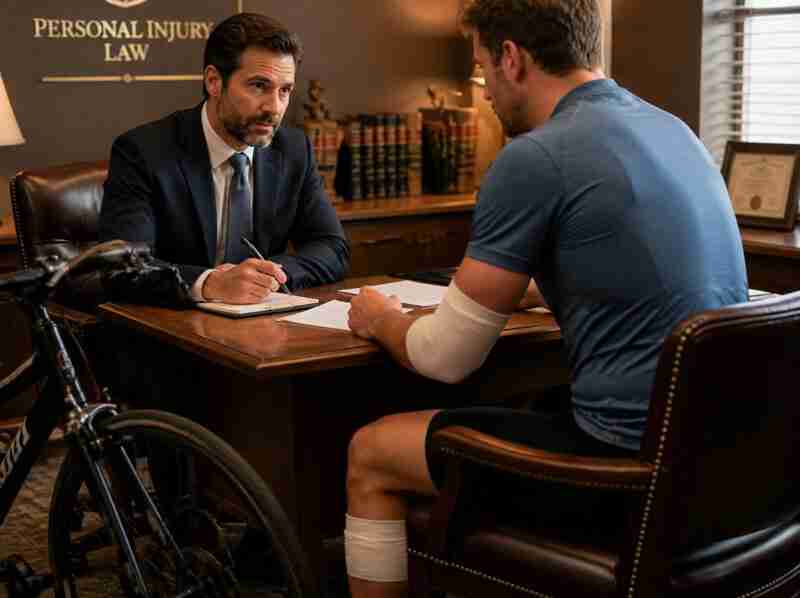
Get Legal Guidance to Make Sure You’re Properly Compensated
A bicycle accident claim in Alberta is worth exactly what your evidence proves it’s worth, no more and no less. Get that evidence locked down early, and the number moves in your favour. Our legal team at Sidhu Personal Injury Lawyers Edmonton handles bicycle accident claims across the city and beyond. Reach out for a free consultation before you talk to an insurance adjuster.
Frequently Asked Questions
Can I file a bicycle accident claim if I wasn't wearing a helmet?
Yes, you can still file a bicycle accident claim in Alberta even if you weren’t wearing a helmet, because not wearing one does not automatically bar you from receiving compensation. Where it becomes relevant is during the insurer’s assessment: they may argue your injuries were more severe than they would have been with a helmet, which could affect the damages calculation. Liability for the collision itself (who caused it) is evaluated separately from your gear. A lawyer can review the specifics of your case and determine how much, if any, impact helmet use may have on your claim.
Will my bicycle accident claim go to court?
Most bicycle accident claims in Alberta settle before ever reaching a courtroom, commonly through negotiation between your lawyer and the at-fault driver’s insurer. Your lawyer collects evidence, documents your injuries and losses, and works toward a settlement that fairly reflects what you’ve been through. A court only becomes necessary when both sides reach a hard disagreement, usually over who was at fault or how much compensation is owed. Even then, many cases settle partway through the litigation process before a judge makes a final ruling.
What if the driver who hit me was a family member or friend?
You can still file a claim if the driver was a family member or friend, because the claim is made against their auto insurance policy, and not against them personally. The insurer pays, not the individual, so it doesn’t come out of their savings or finances. Many cyclists hesitate to pursue a claim in this situation out of concern for the relationship, but the process is devised specifically so that insurance absorbs the cost. A lawyer can walk you through exactly how this works and help you move forward without unnecessary strain on the relationship.