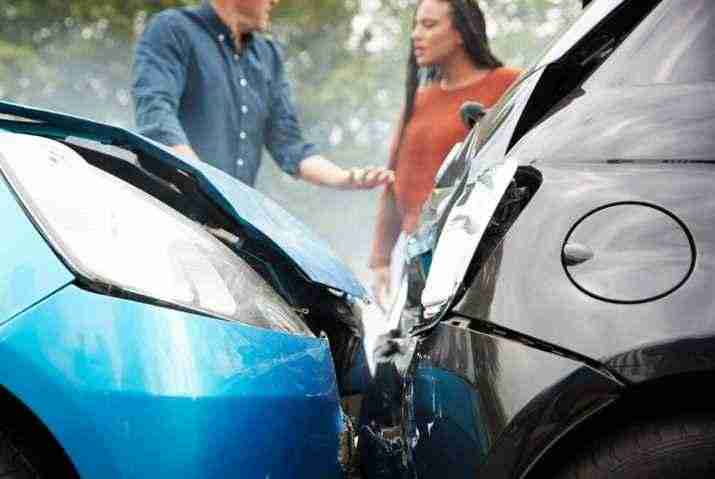
Establishing liability in a vehicle accident is never easy, but it becomes much more so when more than one person is at fault. But what if someone is partially at fault? Can they still get compensation?
Because of the legal concept of comparative negligence, people can still sue for damages even if they are partially responsible. This system considers each party’s responsibility, which can affect compensation.
Understanding your rights and how fault affects your personal injury claim can be difficult, but knowing them and getting guidance from a “car accident lawyer near me” is essential to getting fair compensation.

Parker v. Ford Motor Company
In Parker v. Ford Motor Company, the main question was whether Ford’s defective axle housing caused the truck accident despite other factors.- Proving Liability. The burden of proof was on Parker to establish that the truck’s axle defect was a critical cause of the overturn, regardless of the involvement of other factors.
- Partial Fault. Ford claimed the truck overturned due to skidding or hitting something, but Parker proved that the defective axle was to blame.
- Evidence Matters. The court had to prove the axle defect and its contribution to the crash. Ford disagreed, but the jury found that the axle defect caused the crash.
Johnson and Claverie v. Smith
Dwight Johnson was driving through the Taco Bell drive-through exit lane when Jonathan Smith (ambulance driver) moved from the ordering box and hit his car. Johnson was treated at local hospitals for neck and back pain and missing months of work. The at-fault party (Smith and his company) claimed Johnson was to blame for changing parking lot lanes.- Liability Allocation. The trial court found Smith 100% responsible. They found that the ambulance driver was not vigilant and did not see Johnson before moving forward.
- Lost Wages Award. The defendants challenged Johnson’s $6,500 lost wage award. Despite missing check stubs, the court upheld the award because the plaintiff proved his lost earnings through testimony and health records.
Comparative vs. Contributory Negligence
Comparative and contributory negligence in Canadian car crash claims determine fault and recovery.Comparative Negligence
With comparative negligence, a plaintiff can get some of their money back even if they were partially to blame for the collision. Damages are reduced based on the claimant’s level of liability.Pure Comparative Negligence
- This system allows claimants to recover damages regardless of liability.
- Claims are reduced according to the claimant’s level of responsibility.
- Example: You can still collect $300,000 in damages even if you are 70% at blame if the total damages are $100,000.
Modified Comparative Negligence
- This system imposes a recovery threshold.
- A claimant is not eligible to receive damages if their degree of responsibility is higher than a specific percentage.
- Typical thresholds are 50% or 51%.
Contributory Negligence
If a claimant is even slightly at error, they may not be able to recover any damages under the stricter rule of contributory negligence.- This principle disqualifies claimants who contributed to the incident.
- More equitable methods of resolving personal injury claims are giving way to comparative negligence systems.
Uncommon Factors Affecting Partial Fault in Car Accidents
| Factor | Description | Legal Implication |
| Unclear Traffic Signals | Confusing signals (e.g., unclear red or green lights) can lead to motor vehicle accidents. |
|
| Faulty Vehicle | Mechanical issues such as tire blowouts, brake failure, and steering problems. |
|
| Road Conditions | Potholes, inadequate signage, or poorly designed roads causing accidents. |
|
Ways Insurers Attempt to Shift Fault and Reduce Payouts
Common Tactics
Blaming the Claimant
This can involve exaggerating the claimant’s error or downplaying the other party’s role in the incident.- Emphasizing claimant mistakes while downplaying other party mistakes.
- Insurers may also use selective evidence or distorted interpretations.
- This justifies lower compensation or claim denials by increasing the claimant’s perceived responsibility.
Using Statements Against Claimants
Insurance companies may use claimant interviews, recorded statements, or social media posts to prove blame.- These statements can be misinterpreted or interpreted to benefit the insurer.
- Even minor statements that suggest the claimant was responsible for the crash may be considered by insurers.
- They may also use claimant admissions of responsibility or partial error to their advantage.
Reducing Payouts
- Settlement Offers. Insurers may initially offer a significantly lower settlement than necessary, hoping the claimant will accept it without realizing the total value of their claim. This strategy works well if the claimant does not know their legal rights or damages.
- Disputing Damages. Insurers may dispute claimant injuries or damages. This may involve disputing medical evidence, motor vehicle accident injury severity, or any property damage. They may claim some damages were pre-existing or unrelated to the crash.
Strategies for Challenging an Insurer’s Determination of Fault
Gathering Evidence
| Evidence | Type | Details |
| Documentation | Police Reports | Get your hands on the official police report; it details the incident objectively and includes the officer’s thoughts and any tickets handed out. |
| Scene Photos | Photograph the motor vehicle accident scene, vehicle damage, road conditions, and traffic signals. | |
| Request Witness Statements | Witnesses’ statements can provide an impartial account of the crash. | |
| Expert Testimony | Accident Reconstruction Experts | Examine the scene and offer an impartial assessment of the event. They recreate the event using science and engineering. |
| Medical Experts | Medical experts can assess and testify about injuries to support the accident-related damages claim. |
Legal Actions
File a Complaint
- Formal Complaint to the Insurer. File a complaint if determining its liability seems unfair. Include all relevant evidence and arguments to prove your point.
- Regulatory Bodies. If the situation persists, you can take the matter to the provincial insurance authorities or the Insurance Bureau of Canada (IBC). These organizations can investigate complaints and intervene if insurance practices are unfair.
Negotiation and Mediation
- Negotiation. Directly negotiate blame determination discrepancies with the insurer. For a fair settlement, present your evidence and arguments.
- Mediation. Mediation can help you and the insurer settle if negotiations fail. It is faster and less formal than litigation.
Uncommon Legal Strategies for Disputing Fault
Dashcam Footage
Dashboard cameras record continuous front—and rear-view video. This footage shows the collision in real-time, including:- vehicle movements
- traffic signals
- other drivers
Vehicle Data Logs
Event Data Recorders (EDRs), or vehicle black boxes, are in many modern cars. These devices record speed, braking, and acceleration during the event. These logs can provide objective evidence of the vehicle’s operation before the mishap. Data showing sudden braking or acceleration can clarify the blame by showing the driver’s actions or reactions during the collision.