
“I’m suffering from muscle pain after a car accident. What should I do?”
Some injuries are visible, so it’s easier for a personal injury lawyer Edmonton to prove them and secure a fair settlement. But what about injuries that aren’t visible? Can personal injury law still apply in these cases? If you or someone you know is suffering from invisible injuries and feels like they can’t obtain personal injury claims, you can visit our personal injury law firm.
Key Takeaways
- Injuries such as whiplash, soft tissue damage, concussions, mild traumatic brain injuries, chronic pain, and psychological trauma may not be visible but can still form the basis of valid personal injury claims.
- Proving invisible injuries requires detailed records of pain, activity limitations, treatment, and daily life impact.
- Health records, expert testimony, and witness statements are tools that personal injury law uses to establish the severity and legitimacy of the injury.
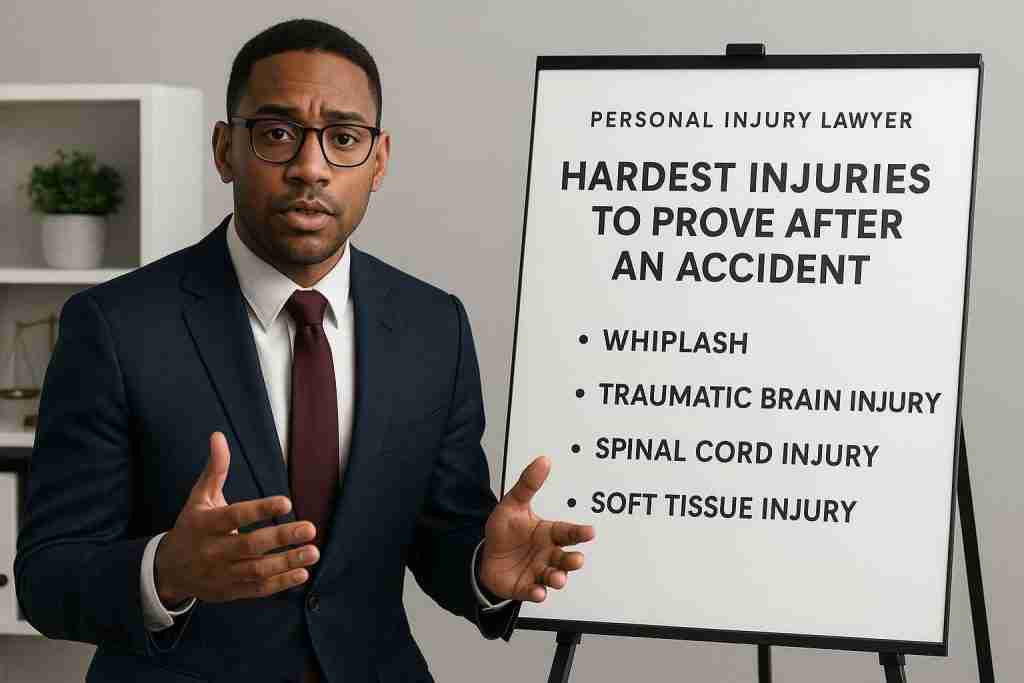
What is the Hardest Injury to Prove?
Injuries are not immediately visible. Think of pain and suffering, mental trauma, traumatic brain injuries, or soft tissue injuries. These are the types of injuries that require a personal injury lawyer to help you obtain proper claims from your insurance company.
Whiplash and Soft Tissue Injuries
Most frequent but most difficult to diagnose. This includes harm to muscles, ligaments, tendons, and other connective tissues. Millions of people are impacted by these injuries every year, but insurance companies frequently write them off as “minor” or made up.
The main issue with soft tissue injuries is that they are difficult to see on CT or X-ray scans. Pain, stiffness, and restricted mobility are among the subjective symptoms that are difficult to quantify.
Concussions and Mild Traumatic Brain Injuries (TBI)
One of the most serious injuries, but hard-to-prove types, is TBI. Although they frequently don’t appear on routine brain imaging, even “mild” TBIs can have terrible, long-lasting effects on personality, quality of life, and cognitive function.
There are no visible wounds from these injuries; they may cause headaches, lightheadedness, or memory issues. Insurers may claim that symptoms don’t relate to the collision because they may show up days after the accident.
Psychological and Emotional Trauma
Motor vehicle accident-related mental health injuries are real, incapacitating, and legally compensable, but they are also some of the most difficult to prove in court. Even though psychological disorders like PTSD, anxiety, depression, and others can be just as debilitating as physical injuries, the legal system is highly skeptical of them.
Chronic Pain Conditions
Accident-related chronic pain conditions pose particular difficulties in court. Since pain is subjective by nature, these conditions are viewed with suspicion, even though they can be more incapacitating than many obvious injuries.
After an accident, people may develop chronic headaches and migraines, myofascial pain syndrome, chronic fatigue syndrome, Complex Regional Pain Syndrome (CRPS), fibromyalgia, and other conditions that can last for years or a lifetime. Since pain is subjective and cannot be objectively measured by any medical device, proving it is difficult.
How Can an Experienced Personal Injury Lawyer Help?
Since these types of personal injury accidents can be difficult to prove, it’s natural to feel discouraged. You may think that you don’t deserve to receive personal injury compensation. But you’re wrong. You can still pursue a personal injury case, and the first step is to consult a personal injury lawyer.
Expert Testimony and Medical Records
Alberta personal injury lawyers will use records and testimonies.
- Medical records offer unbiased testimony regarding the type and severity of the injuries. They’ll use imaging results, treatment plans, and thorough physician reports.
- Expert testimony explains medical complexities to juries and judges. Expert witnesses, who are medical professionals, are able to provide testimony regarding the extent of the injuries.
The Day-in-the-Life Method
Thorough documentation of the injury’s impact on day-to-day life is one of the most effective methods for demonstrating invisible injuries. You will produce detailed records that fully capture the challenges you face.
Documentation uses a variety of methods, including:
- Daily pain and symptom journals
- Activity limitation logs
- Medication and treatment records
- Work productivity assessments that show diminished capacity
- Video documentation illustrating limitations in action.
Witness Statements
The claim may be supported by statements made by friends, family, and coworkers who witnessed the injury and its consequences. The impact of the injury on day-to-day functioning is corroborated by these eyewitness reports. The consistency of these statements can be improved through structured interviews.
Work with an Experienced Personal Injury Lawyer Edmonton for Fair Compensation
Partnering with a reputable law firm can provide guidance during the legal process. Experienced lawyers know exactly how to advocate for the injured person. If invisible injuries result from motorcycle accidents, car accidents, slip and fall accidents, or more, a free consultation is available at Sidhu Personal Injury Lawyers Edmonton. Each case is reviewed to determine if it was caused by someone else’s negligence, so there is an opportunity to recover compensation for lost wages and medical expenses.
Other cases we handle include wrongful death, truck accidents, injury victims due to pedestrian accidents, situations where an insurance company refuses an accident victim, catastrophic injuries, fatal accidents, or a wrongful act causing injury or harm.
Frequently Asked Questions
Will my pre-existing condition affect my claim?
It is possible, but when you have experienced Edmonton personal injury lawyers handling your personal injury litigation, you can receive fair compensation. Your legal representation can review your records and determine whether the current pain you are experiencing is due to a spinal cord injury from an accident or from a pre-existing condition.
Is legal assistance necessary even for invisible injuries from minor accidents?
Yes. Injuries that are not immediately visible can lead to long-term health issues and create a financial burden due to ongoing medical costs and lost productivity. A skilled personal injury lawyer can help you receive maximum compensation for your injuries.
How can a lawyer prove psychological trauma?
A lawyer can prove psychological trauma by presenting well-documented evidence. Treatment records show ongoing mental health issues and persistent symptoms. Comparing mental health before and after the accident shows the impact of the incident. Expert testimony also explains trauma and PTSD to juries, and family statements about changes in personality and behaviour support the claim.