
Talk to an Edmonton personal injury lawyer, and you might be surprised to know you have rights you’ve never thought of. After an accident, most injury victims focus only on medical bills and lost wages. But, bigger rights drift during the personal injury claim process.
Alberta law protects accident victims more than most people realize, but these protections only help you if you know they exist.
Below are the rights victims commonly miss, misunderstand, or don’t exercise early enough, yet they can dramatically change the outcome of personal injury cases.
Key Takeaways
- Many Edmonton residents miss out on major compensation because they don’t know these rights exist.
- Alberta law protects long-term needs, including housekeeping loss and future care.
- Multiple parties can be responsible, and injured people can switch lawyers at any point.
1. You Have the Right to Claim Future Cost of Care — Even if You’re “Okay for Now”
Alberta courts allow compensation for future care needs, not just what you’ve already paid for. This includes long-term expenses tied to:
- chronic pain
- spinal cord injuries
- traumatic brain injuries
- soft tissue injuries that linger
- psychological injury
Under Alberta’s Torts Act and case law principles for “future pecuniary damages,” an injured person can pursue ongoing costs as long as evidence shows those needs are reasonably expected.
For instance, you’re involved in a motor vehicle accident, but do not feel serious symptoms at first. Then two months later, nerve pain begins, movement becomes restricted, and you need physiotherapy for another year. If this possibility is not documented early, the insurance company may argue that the care is unrelated.
A good assessment (sometimes involving specialists or functional capacity evaluations) helps guarantee future-care damages are available for:
- Long-term physiotherapy
- Counselling for traumatic brain injury victims
- Support devices or mobility aids
- Future medications
- Ongoing chiropractic or massage therapy
2. Claiming Loss of Housekeeping Capacity
As an injury victim, you may never know about this one until a lawyer brings it up.
Loss of housekeeping capacity is a common but often missed part of personal injury damages. It describes when an injured person can’t handle regular household tasks (be it suddenly or over time) due to personal injuries. This can include cooking, cleaning, shopping, yard work, and even childcare, as recognized in Campbell v. Banman, 2009 BCCA 484. Commonly supported by medical notes and functional assessments, this right applies to injuries such as:
- permanent injuries
- spinal cord injury
- traumatic brain injuries
- soft tissue injuries that limit lifting
- motor vehicle accidents resulting in long-term pain
The loss can be compensated under different types of damages depending on the details of the case.
Loss of housekeeping capacity can be fairly compensated in different ways depending on the situation.
- If you can still do chores but with pain or difficulty, it’s treated as a non-pecuniary loss (pain, suffering, loss of amenities).
- If you can’t perform certain tasks anymore and need paid help (or a family member is doing the work for free), it becomes a pecuniary loss.
Courts distinguish this from future care costs: housekeeping capacity is the loss of the person’s own ability, while future care covers new expenses they’ll have to pay. If the cost was already paid before trial, it falls under special damages.
The provincial court also avoids double recovery. If yardwork is already compensated under future care, it won’t be counted again under housekeeping. And if the loss of housekeeping capacity is already recognized, courts won’t add an in-trust award for family members doing the same chores.
3. Multiple Liable Parties Might Owe You Compensation (Not Just One)
Accidents rarely have a single cause. Yet most victims assume “one person hit me, so it’s one claim.”
In Alberta, fault can be shared. Under the Contributory Negligence Act and Alberta case law, victims may pursue multiple liable parties, which increases the chance of receiving the fair compensation needed for recovery.
You could have:
- a negligent driver
- a distracted pedestrian
- a commercial vehicle operator
- a property owner
- a manufacturer (in product-related injuries)
- a municipality (for road maintenance failures)
For example, a car accident caused by a speeding driver becomes worse when an intersection’s traffic signals malfunction. There might be two parties sharing liability: the at-fault driver and possibly the municipality.
When more than one party is involved, as an injured person, you may access more comprehensive damages. This is especially important for serious injuries where costs exceed a single party’s insurance limits.
4. You Can Change Lawyers if You’re Unhappy (Yes, Even Mid-Case)
You can switch to another personal injury law firm whenever you feel you’re not being heard or supported. Remember, you’re not tied to a lawyer forever.
The legal system allows you to change legal representation during personal injury litigation or negotiations, even if the case has been ongoing for months. The transition is handled between law firms, usually without you dealing with conflict or awkwardness.
Reasons you might want to change lawyers
- slow communication
- feeling dismissed
- lack of clarity on case progress
- concerns about missing damages
- disagreement over settlement strategy
Most Edmonton personal injury lawyers work on a contingency fee basis, so switching normally doesn’t create upfront costs.

Unsure about the next steps after an accident? If you’re a victim of unlawful acts or unfortunate circumstances, let our Sidhu Personal Injury Lawyers Edmonton team fight for a favourable settlement. Get your free consultation today.
5. Family Survivors Have Their Own Rights in Wrongful Death Cases
Alberta’s Fatal Accidents Act sets out specific rights for family survivors after a loss caused by someone else’s negligence. These rights exist separately from any estate claim and are meant to support family members emotionally and financially.
Many families don’t realize they can make claims even if:
- Accident victim passed away days or weeks later
- Fault is not yet perfectly clear
- Insurance company communication has been confusing
- Police investigations are still ongoing
You recover damages for grief, sorrow or mental anguish.
Compensation covers loss of companionship. But the Canadian law separates loss of companionship from grief and sorrow. Loss of companionship refers to being deprived of a loved one’s care, guidance, and presence, which can be claimed as non-pecuniary damages in most provinces, while grief and sorrow are only compensable in certain provinces like Alberta and New Brunswick with fixed statutory amounts.
According to Section 8 of the Fatal Accident Act, here’s how the awards are structured:
| Beneficiary | Amount Awarded |
| Surviving spouse | $3,000 |
| Parents of the deceased child | $3,000 (shared equally if both parents are included) |
| Minor children of the deceased parent | $3,000 (shared equally among the children) |
If the deceased is a married person with minor children and surviving parents, the total bereavement award is $9,000: $3,000 each for the spouse, minor children, and parents. This system simplifies the process while acknowledging the loss of companionship and care.
Because wrongful death cases involve substantial life changes, families benefit from legal assistance early to make sure no deadlines or rights slip away.
6. Personal Injury Claims For Punitive (Exemplary) Damages
These damages aren’t about replacing financial loss. They’re meant to punish exceptionally bad behaviour. Punitive damages may apply when the at-fault party’s conduct was:
- intentional
- reckless
- malicious
- grossly negligent
In Alberta, courts consider punitive damages when the defendant’s behaviour shows serious disregard for safety or human life. For example:
- extreme drunk driving
- racing on public roads
- dangerous commercial practices
- intentional disregard of known safety hazards
Even though punitive damages aren’t usually awarded, they’re an important part of personal injury litigation, especially for motorcycle accidents, commercial vehicle incidents, or cases involving repeated negligent actions.
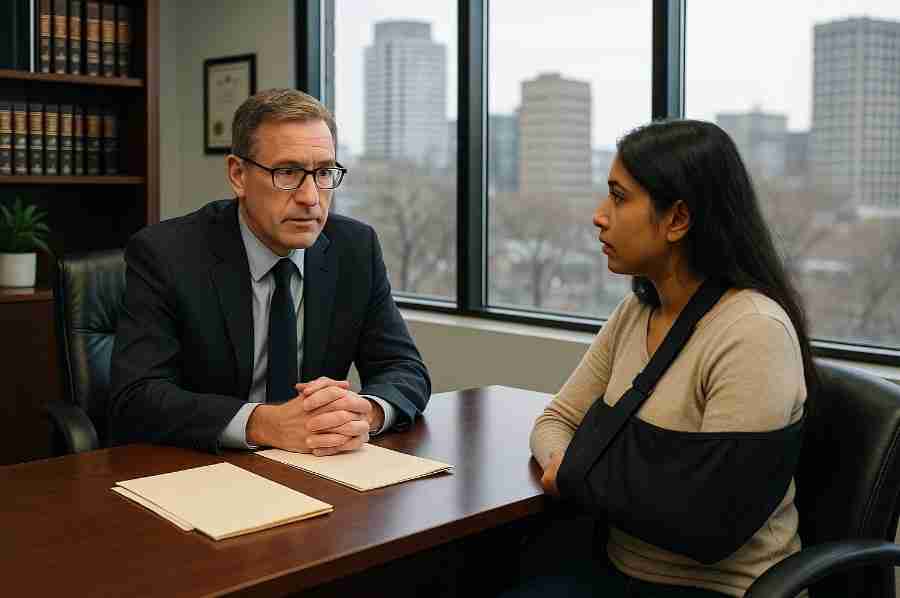
Let Experienced Personal Injury Lawyers in Edmonton Protect Your Rights
If you’ve suffered injuries because of someone else’s negligence, be it from car accidents, motor vehicle accidents, unsafe property, or any situation that created life-changing effects, your rights deserve full protection. These rights lead to fairly compensated claims, better financial stability, and the kind of support that lets you rebuild after a chaotic experience.
A knowledgeable team at Sidhu Personal Injury Lawyers Edmonton helps you understand potential problems, review your damages recovered, and guide you through the legal process with clarity, reassurance, and steady support.
You don’t have to deal with the personal injury case alone, especially when the goal is the fair and just compensation you deserve. Contact us and get your free initial consultation.
Frequently Asked Questions
Is it hard to win a personal injury case?
Winning a case isn’t necessarily “hard,” but it does require careful preparation and the right legal guidance. Success depends on proving that the at-fault party directly caused your injuries and showing the impact on your life, including lost wages, pain, and suffering. Working with a personal injury lawyer can make a big difference, so you navigate the process and increase the chances of maximum compensation.
What injuries pay the most?
Traumatic brain injuries (TBI) and spinal cord injuries lead to the largest settlements due to permanent disability, long-term care needs, and lost income. For example, in MacNeil v. Bryan, a 15-year-old passenger suffered severe brain and spinal injuries, leaving her unemployable and needing full-time care. The court awarded CA$18.4 million for rehabilitation, future care, and management costs. This case is among the largest personal injury settlements in Canadian history.
How do injury lawyers negotiate a higher settlement?
Lawyers negotiate higher settlements by carefully reviewing your case, gathering evidence of health impacts, lost wages, and pain and suffering. The legal counsel highlights negligence, anticipates insurance company tactics, and uses combined injury law experience to argue for substantial compensation or a fair settlement.