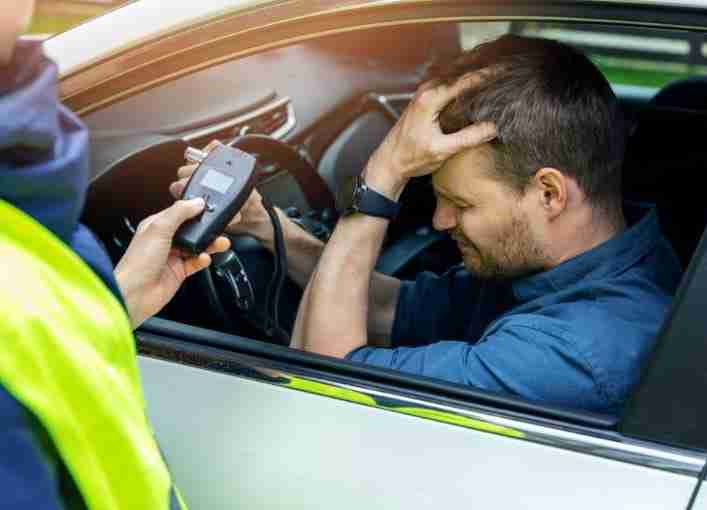
Drunk driving remains a public safety issue in Canada, contributing to thousands of accidents, injuries, and fatalities annually. In response, Canadian authorities have implemented Mandatory Alcohol Screening to combat impaired driving.
Research indicates that liquor impairment is a leading factor in road traffic accidents. The Canadian Institute for Health Information reports ethanol is involved in 30% of all fatal road crashes.
This proactive approach not only deters offenders but also enables law enforcement and drunk driving accident attorneys to identify and penalize those who might otherwise evade detection.

What is Mandatory Alcohol Screening (MAS)?
Prior to December 18th, 2018, Canadian law enforcement relied on “reasonable suspicion” to administer roadside breathalyzer tests. This meant officers needed a basis to believe a driver was under the influence before demanding a breath sample. The introduction of Mandatory Alcohol Screening through amendments to the Criminal Code of Canada changed this approach.- The breath screening device used in MAS is the Approved Screening Device (ASD), a handheld instrument that provides a preliminary alcohol concentration (PAC) reading. Note that the result is not admissible in court as evidence of intoxication.
- A “warn” result on the ASD (indicating a possible presence of ethanol) authorizes officers to demand a further breath test using an Intoxilyzer instrument at a police station. The reading forms the legal basis for charges of impaired driving.
Purpose of MAS
Deterrence of Impaired Driving
It serves as a preventive measure by raising the perceived risk of being tested for drink consumption. When intoxicated drivers know that they’re subjected to random ethanol tests at any time, they’re less likely to drive after consuming an alcoholic drink. This deterrent effect reduces the number of people who operate vehicles while impaired.Increased Detection of an Impaired Driver
Traditional enforcement relies on signs of impairment or traffic violations to trigger testing. It removes these prerequisites, allowing law enforcement officers to test them indiscriminately. This increases the chances of detecting drunk road users with a BAC above the legal limit.Enhanced Enforcement of Alcohol-Related Laws
By implementing screening, authorities effectively enforce laws regarding alcohol consumption and driving. It ensures that all drivers, not just those who exhibit signs of intoxication, are subject to scrutiny, thus promoting uniform application of drunk driving laws.How is MAS Implemented?
| Establishment of Checkpoints | Random establishment of roadblocks or checkpoints in various locations ensure unpredictability for drivers, which maximizes the deterrent effect. |
| Set up in high-risk areas identified through car accident statistics or traffic patterns, including urban intersections, highways, and areas with a high density of bars or entertainment venues | |
| Breathalyzers | Portable breathalyzers, such as the Alco-Sensor or the Intoxilyzer 8000, measure the concentration of liquor in a driver’s breath. |
| Involves blowing into the device to measures the amount of booze in the breath sample. Expressed as a percentage BAC, and if it exceeds the limit, further testing or legal action is pursued. |
What is the Impact of MAS on Drunk Driving Accidents in Canada?
National Data on Impaired Driving
According to MADD Canada’s report, in 2021, Canada saw 78,480 total charges and short-term suspensions for ethanol or drug-impaired driving. This results in 206 charges per 100,000 Canadians and an average of 215 charges daily. The report notes an increase in liquor-related criminal charges in 2019 compared to 2017 and 2018. However, the COVID-19 pandemic led to a decrease in charges and suspensions in 2020 and 2021, likely due to reduced driving and checkpoint operations.Increase in Screening Coverage
- Data reveals a substantial increase in the rate of Approved Screening Device (ASD) tests administered. Prior to the implementation, only 11.6% of drivers stopped at Checkstops were subjected to ASD testing.
- After the introduction of screening, this rate surged to 99.2%. This drastic increase proves that it effectively expanded the scope of testing, encompassing nearly every drunk driver at checkpoints.
Increase in Detection and Enforcement Actions
- Data indicate a 33% increase in enforcement actions—comprising impaired arrests, Immediate Roadside Suspensions (IRS), and Graduated Driver Licence (GDL) suspensions.
- Analysis estimates that during the post-MAS period if the detection rate had remained at pre-MAS levels, 143 drinking drivers might have evaded detection.
- Identified approximately 532 additional drinking drivers during the pre-MAS period, which highlights the effectiveness of screening.
Provincial Variations
The effectiveness of MAS and the overall charge and suspension rates vary by province. For instance, British Columbia has a high rate of short-term licence suspensions due to its robust enforcement programs, including roadside prohibitions for drivers with a BAC of 0.05% or higher. In contrast, Quebec’s lower rates are attributed to its limited use of short-term suspension programs, relying primarily on criminal charges.What are the Blood Alcohol Concentration (BAC) Limits?
In Canada, the legal BAC limit for fully licensed drivers is 0.08%. This means that a driver’s BAC must not exceed 0.08 grams of alcohol per 100 millilitres of blood to ensure sufficient cognitive and motor skills for safe vehicle operation. In many provinces, novice and young drivers are subject to lower BAC limits, often set at 0.00% or 0.05%. These stricter limits reflect the increased risk associated with inexperienced motorists, aiming to promote a zero-tolerance approach.Calculation of BAC
Breathalyzer devices provide a direct BAC reading, which is calculated using the following formula: BAC = ALCOHOL CONSUMEDBODY WEIGHT WIDMARK FACTOR The Widmark Factor accounts for the difference in distribution between men and women, with values set at 0.68 for men and 0.55 for women.Standard Drink Conversion
The BAC result can be influenced by the amount of drink consumed. A standard drink containing 14 grams of pure alcohol can increase BAC by approximately 0.02% to 0.03% per hour, depending on factors such as metabolism and body weight.Factors Affecting BAC
| Metabolism | On average, the liver metabolizes alcohol at approximately 0.015% BAC per hour. This rate varies based on factors such as age, gender, and overall health. |
| Body Weight and Composition | After consuming the same amount of drink, individuals with higher body weight have a lower BAC than those with lower body weight due to the distribution of the drink in body tissues and fluids. |
| Alcohol Content and Consumption Rate | Higher alcohol content and rapid consumption lead to a quicker rise in BAC. |
The Role of a Drunk Driving Accident Lawyer
Legal Representation for Drunk Driving Victims
Represent drunk driving accidents victims in a personal injury claim resulting from impaired driving accidents. This involves seeking compensation for damages such as healthcare, lost wages, pain and suffering.Gathering and Analyzing Evidence
Accident lawyers gather evidence to build a strong case, including police reports, healthcare records from medical professionals, witness statements, and expert testimony. This also include reviewing the impaired driver’s blood alcohol concentration (BAC) levels and any relevant roadside sobriety test results.Litigation and Court Representation
When a fair settlement cannot be reached, an injury lawyer files lawsuits to pursue compensation through the courts. Personal injury lawyers in Edmonton present evidence, examine witnesses and argue on behalf of their clients. They aim to demonstrate the drunk driver’s liability and the extent of the victim’s damages to secure a favourable verdict in the personal injury case.